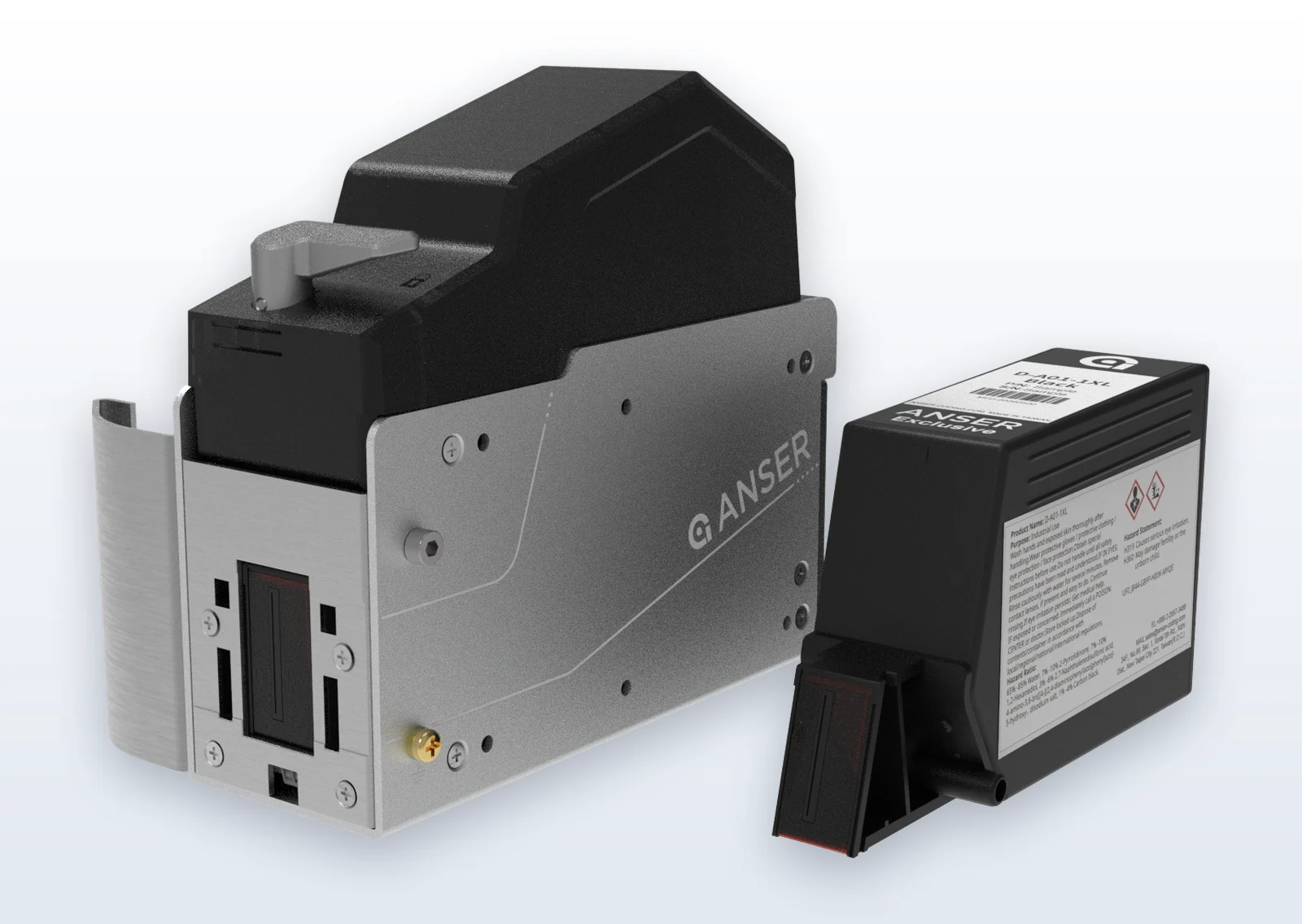

X1 Lite + T2XL · 160 mL
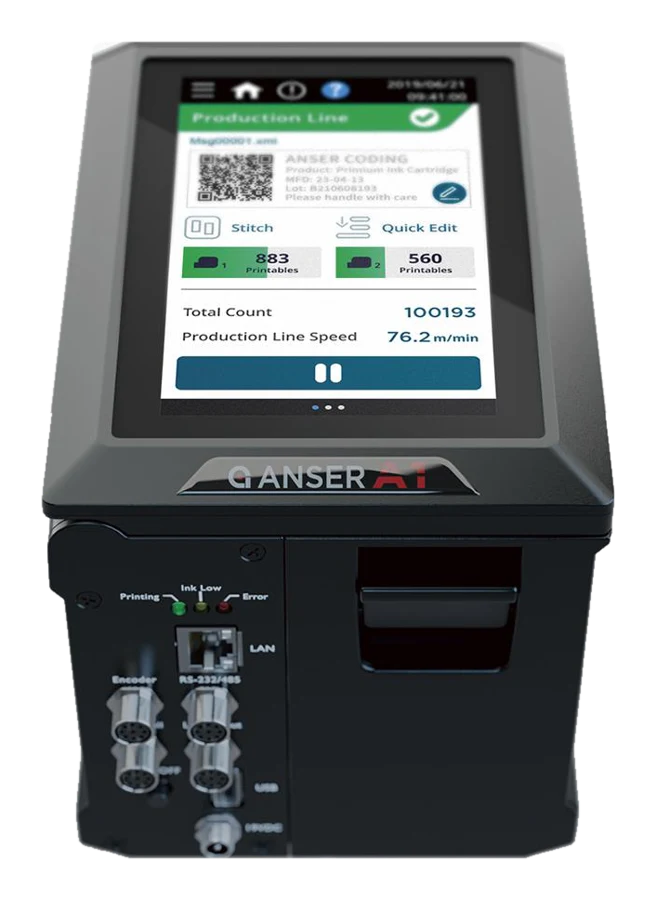
One line, the lowest running cost: the 160 mL cartridge on a 7" touchscreen controller.
- Code height
- Up to 1" (½" codes too)
- Resolution and speed
- 300 × 600 dpi · 60 m/min at 300 dpi
- Controller
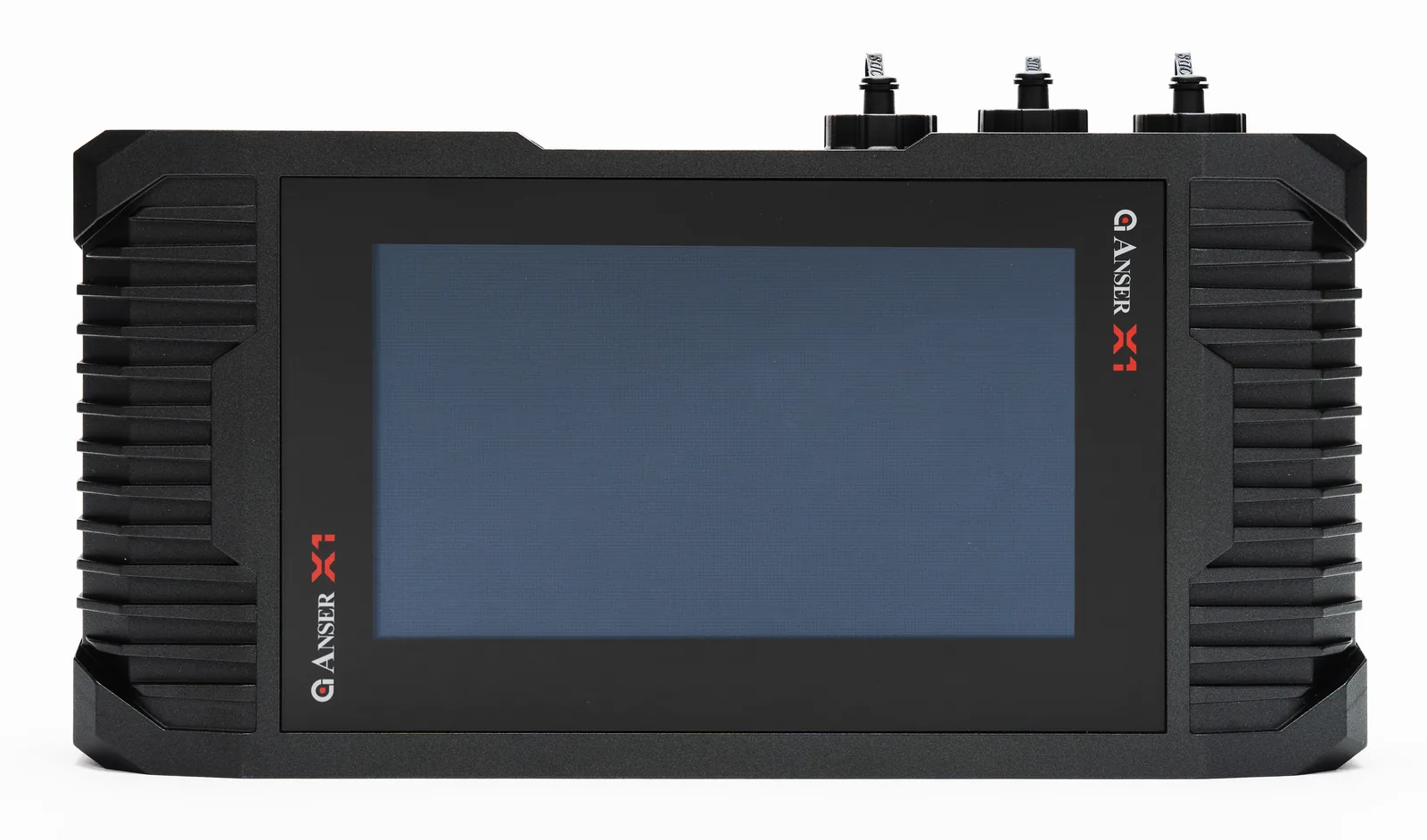
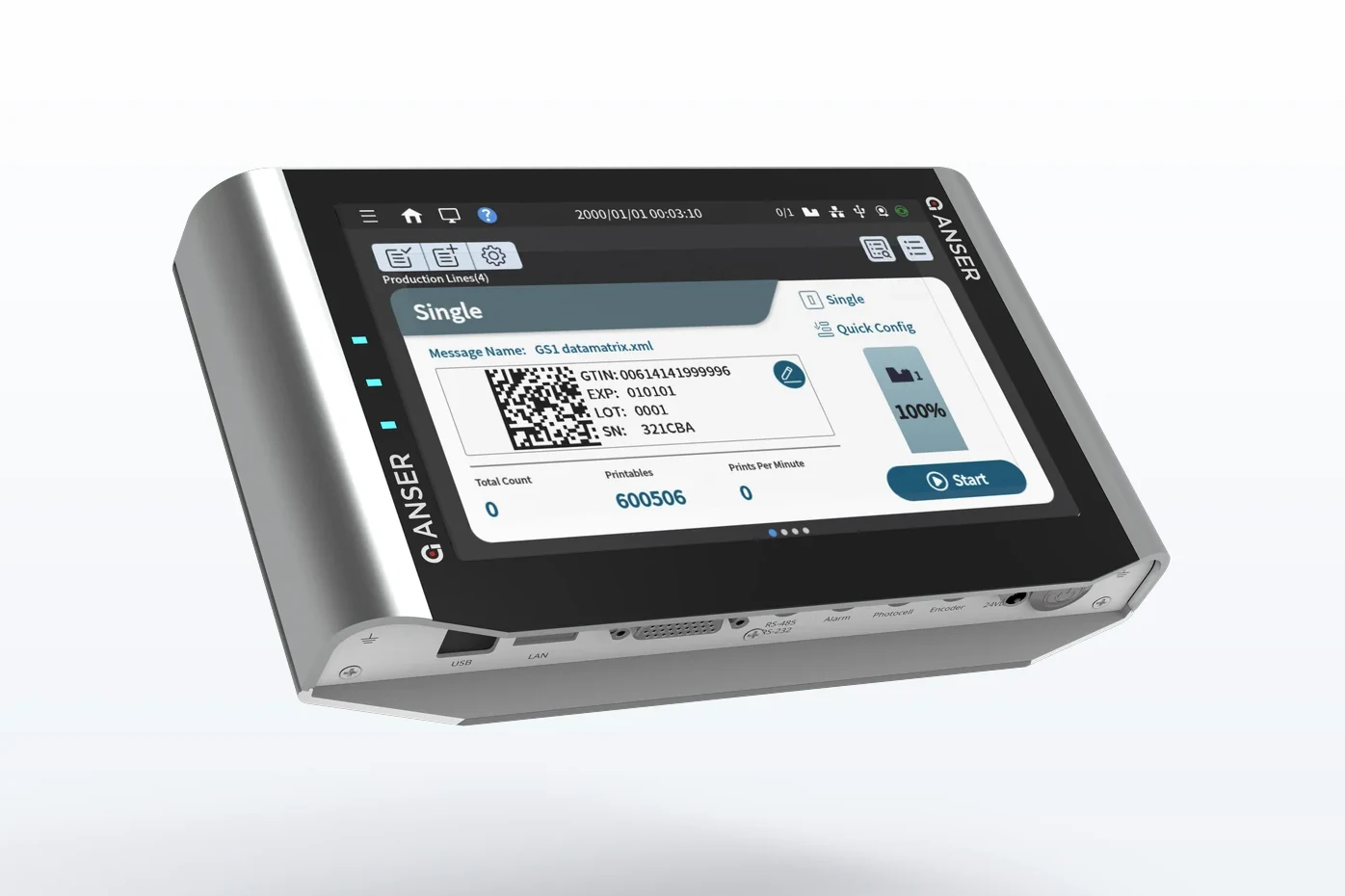
- 7" touchscreen, one head
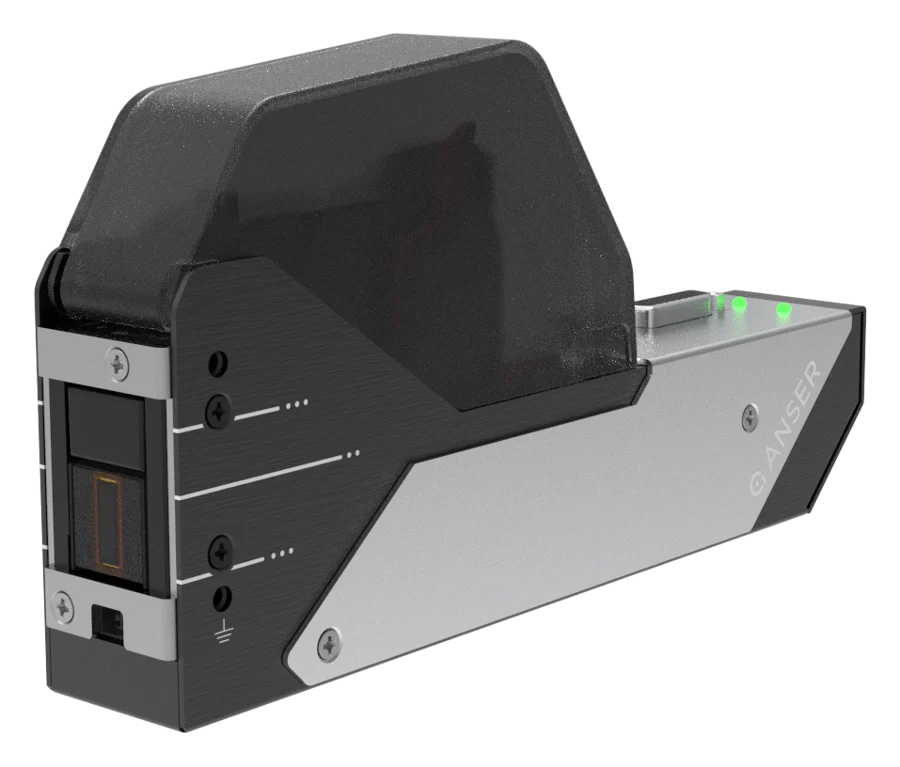
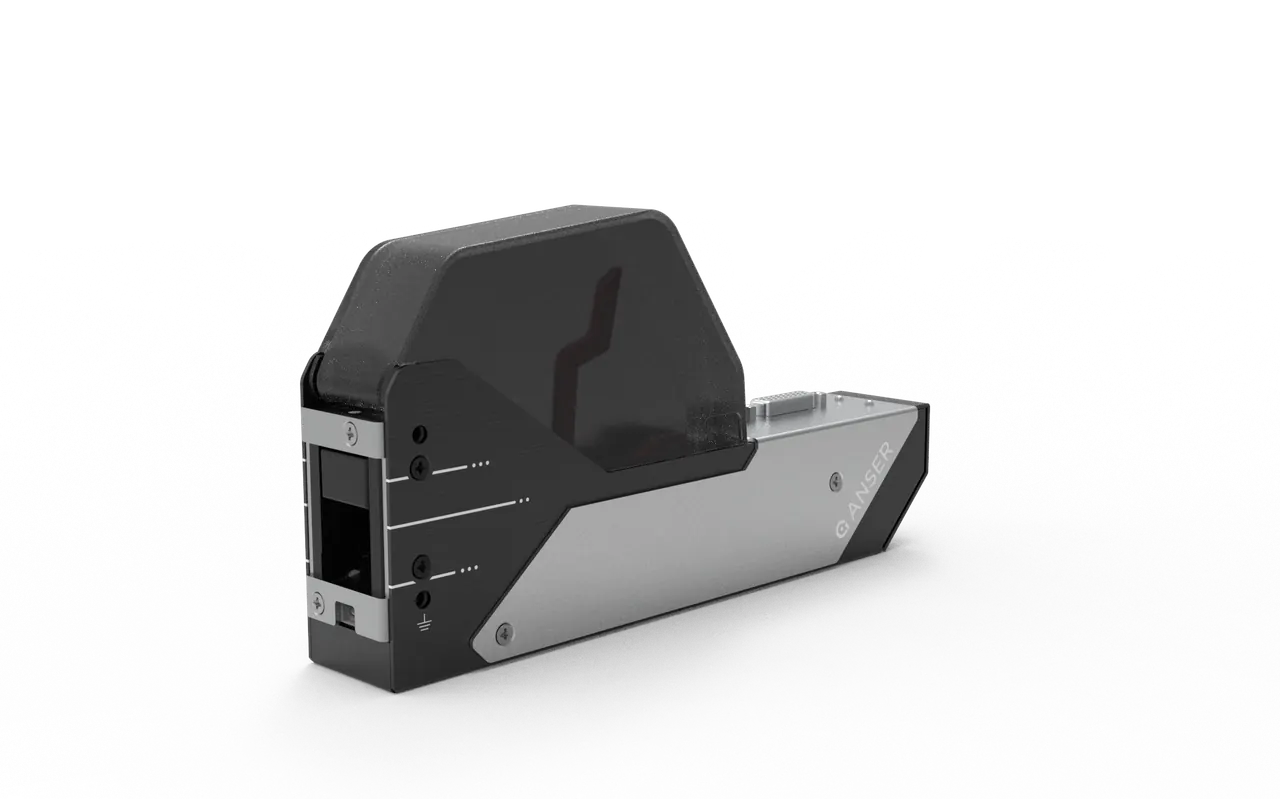
A thermal inkjet case coder for sharp dates, lot codes, barcodes and logos on corrugated cases and cartons, with a 160 mL cartridge that holds 4× the ink of a standard one.
Case coding is the code on the outside of the box: the date, lot, product ID, ITF-14 barcode or logo that a warehouse reads before anyone opens the case. Pre-printed boxes cost you a stock-keeping problem every time a product or date changes. Coding the case on the line fixes that, as long as the coder keeps up with the line and doesn't eat your shift in cartridge changes.
Thermal inkjet suits this job. Each cartridge is sealed, so there's no make-up fluid to manage and almost no scheduled maintenance. Codes print at 300 to 600 dpi, so they read crisp, not like the dot-matrix text of a large-character coder.
Pre-set for this job: 1" code height, lowest running cost.


One line, the lowest running cost: the 160 mL cartridge on a 7" touchscreen controller.


Two lines or a wet or dusty area: the 160 mL cartridge on the IP66 dual-head controller.
Lower volumes, or a sharper ½" code at 600 dpi.
We supply the Anser printers, the Odyssey inks and the on-site technical support behind them, and we work alongside your distributor, who handles the quote and local service. Before you buy, we'll help you qualify the ink and printhead on your own cases. Every Anser NexGen printer carries a 5-year warranty, honored by TPS.
It depends on the resolution you choose. At 300 dpi, our case coders print at 60 m/min (about 197 ft/min). At 600 dpi, about 30 m/min. You'll see "up to 300 m/min" quoted for thermal inkjet; that figure is at 60 dpi, which is too coarse for a readable date or barcode. Set the resolution your code needs, and the speed follows.
Yes. A printhead's print height is the band it prints within, so a 1" head prints any code up to 1". That includes the 160 mL heads. The trade-off: they print at 300 × 600 dpi, while a ½" standard cartridge prints at 600 × 600 dpi. Both run at 60 m/min at 300 dpi.
Start with the code height and the look you need. Valve-jet (large-character) coders print big, low-resolution dot-matrix text on outer cases. Piezo case coders can print much taller codes. Thermal inkjet prints high-resolution codes up to 1" in a single pass (2" with stitched heads) from sealed cartridges with almost no maintenance. We supply thermal inkjet, and we're happy to talk through where the others fit.
A water-based ink. Corrugated board is porous, so the ink soaks in and dries almost on contact. The 160 mL Odyssey water-based ink is rated for paper, cardboard, wood and coated stock. Shrink-wrapped, film-laminated or plastic packaging needs a solvent ink instead. Send us your substrate and we'll match it.
Very little. Thermal inkjet cartridges are sealed, so there's no make-up fluid to top up, unlike continuous inkjet (CIJ). The 160 mL cartridge also needs no bulk-ink plumbing. When a code shows gaps, our print-quality troubleshooting guide covers the fixes.
TIJ print-quality troubleshooting →Yes. The printers support ITF-14, DUN-14, SSCC-18, Code 128, GS1 DataBar, QR and GS1 Data Matrix, with dates, counters and variable data, and each case can carry its own serial number. Scan quality depends on your board and setup, so we'll check it on your own cases.
A TPS coding specialist will contact you, then connect you with the right distributor.